
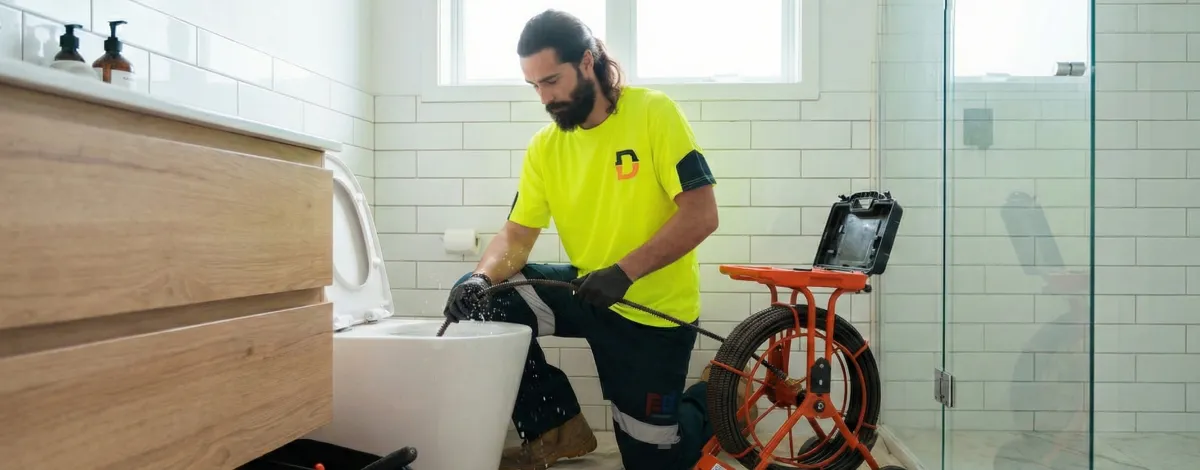
How to unblock a toilet
How to unblock a toilet: stop flushing, use a proper toilet plunger to create a tight seal, then plunge in short, firm bursts. If it still won’t clear, use a toilet auger, and if multiple fixtures are backing up the blockage may be further down the line and you should call a drain specialist.
If water is rising, overflowing, or you’re dealing with sewage smells, contact The Drain Unblockers. We service Central Auckland, the North Shore, West Auckland, South Auckland, and East Auckland.
Before you start: the 60-second safety check
A blocked toilet can turn messy quickly, so do this first.
• Stop flushing immediately. Every extra flush can cause an overflow.
• If the water is rising, turn off the toilet’s water supply tap (usually behind the toilet).
• Put on gloves, open a window, and keep kids and pets out of the bathroom.
• If you have used drain chemicals already, do not plunge or snake straight away. Ventilate and follow the product safety instructions to avoid splashes and burns.
• Avoid caustic chemicals, especially in older pipes. Strong acids or alkalis can damage plumbing and create serious splash hazards.
Common causes of a blocked toilet in Auckland homes
Most toilet blockages are simple, but a few are signs of a deeper issue.
Typical causes:
• Too much toilet paper, especially with low-flow toilets
• “Flushable” wipes, paper towels, sanitary items, cotton buds, nappies (these should never be flushed)
• Foreign objects (kids’ toys are a common culprit)
• Build-up further down the line from grease or debris
• Tree roots, cracked pipes, or a sagging line (more common in older properties)
• Multiple drains slow at once (toilet, shower, sink) which often points to a main line problem rather than the toilet itself
If your toilet keeps blocking, or other drains are also slow, a CCTV drain inspection can find the exact cause so you’re not guessing.
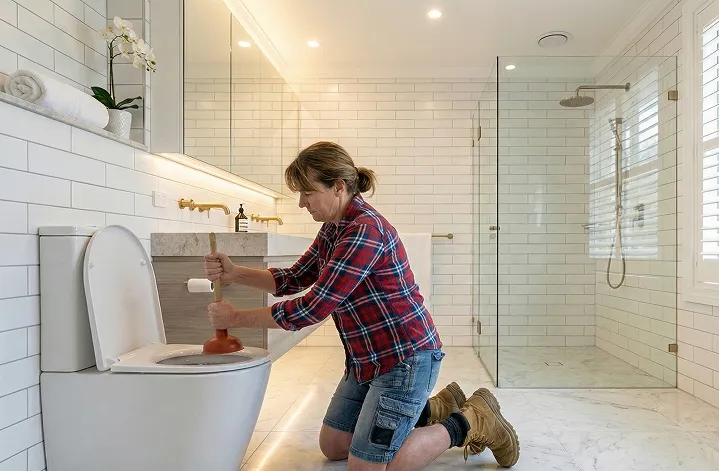
DIY HowTo: How to unblock a toilet safely (step-by-step)
Estimated time: 10–60 minutes
Difficulty: Easy to Moderate
Best for: Paper clogs and minor blockages
Stop and call a pro if: the toilet overflows, you see sewage, multiple fixtures are affected, or the blockage keeps returning
Tools and supplies
• Rubber gloves
• Old towels
• Bucket and a small cup or jug
• Toilet plunger (flange plunger is best for toilets)
• Toilet auger (also called a closet auger), optional but very effective
• Dishwashing liquid
• Hot tap water (not boiling)
What not to use
• Caustic soda or strong drain openers (risk to you and your pipes)
• A wire coat hanger (can scratch and crack the toilet, and it often pushes the blockage deeper)
• Repeated flushing (increases overflow risk)
Steps:
- Protect the area and stop the overflow risk
- Lay towels around the base of the toilet. If the water is close to the rim, turn off the supply tap. Remove some water from the bowl with a cup into a bucket so you have room to plunge without spilling.
- Add dishwashing liquid and wait
- Pour about half a cup of dishwashing liquid into the bowl. Wait 10–15 minutes. This can help lubricate the clog and make plunging more effective.
- Add hot tap water (not boiling)
- Carefully pour a bucket of hot tap water from waist height into the bowl. The gentle force plus warmth can help soften paper build-up. Avoid boiling water, which can crack porcelain and stress older plumbing.
- Plunge properly (this is the key step)
- Use a toilet plunger with a flange. Press it down to form a tight seal over the hole.
- Plunge in short, firm bursts for 20–30 seconds, then pause and see if the water level drops.
- Repeat up to 3 rounds. Most paper clogs clear here if the seal is good.
- If plunging fails, use a toilet auger
- Insert the auger end into the toilet bowl and feed it gently into the trap. Turn the handle clockwise while applying light pressure.
- When you feel resistance, keep turning to break through or hook the blockage.
- Pull the auger back slowly. Flush once, gently. If it drains normally, you’re done.
- Confirm it’s clear and clean up safely
- Once the bowl refills and drains normally, do a test flush. Clean and disinfect the plunger and auger, then wash hands thoroughly.
Troubleshooting: signs the blockage is deeper than the toilet
Stop DIY and get help if you notice any of the following:
• The toilet clears briefly then blocks again within days
• You hear gurgling in other drains
• Water backs up in a shower, bath, or floor waste when you flush
• There are strong sewer smells
• You see waste backing up, or you have an overflow outside
If the issue looks like a deeper line blockage, professional drain unblocking is usually safer and faster than repeated DIY attempts.
How to unblock a toilet drain outside
If the toilet blockage seems to involve the outside drain, you may see water or waste backing up at an outside gully trap, or multiple fixtures might slow down at the same time.
Estimated time: 10–30 minutes (for basic checks)
Difficulty: Easy (basic checks), stop if you see sewage overflow
Safety: Wear gloves, avoid splashes, and keep clear of overflow
- Find the gully trap outside
- In many Auckland homes, there’s a gully trap outside near the bathroom or laundry. It looks like a small grated drain set into the ground. If it’s overflowing when you flush, the blockage is likely downstream of that point.
- Check for obvious blockages at the gully
- Remove leaves, debris, and any visible build-up around the grate. Do not poke blindly with metal tools. If the water is sitting high and not moving, stop and call a pro.
- Test the system carefully
- With someone outside watching the gully, do a single gentle toilet flush.
- • If the gully rises or overflows, the line beyond it is blocked.
- • If the gully stays calm but the toilet still won’t drain, the blockage may be in the toilet trap itself.
- Do not use chemicals outside
- Avoid tipping drain chemicals into outside gullies. It can be dangerous, harmful to pipes, and it makes professional work riskier.
- When outside blockages keep happening
- Recurring outside overflow can indicate roots, a damaged pipe, or a poor fall. A CCTV drain inspection can confirm what’s happening and whether you need a drain repair.
When to call a professional in Auckland
Call The Drain Unblockers if:
• The toilet is overflowing or close to overflowing
• You suspect sewage is backing up
• The toilet drain outside is overflowing at the gully trap
• You have repeated blockages
• More than one drain is affected
We can clear the blockage using the right equipment, and if needed we can inspect the line to find the cause. For urgent help, contact The Drain Unblockers
We help homeowners across Auckland, including Central Auckland, the North Shore, West Auckland, South Auckland, and East Auckland. If you’re unsure whether it’s the toilet or the outside line, it’s better to stop early than force a flush and trigger an overflow.
