
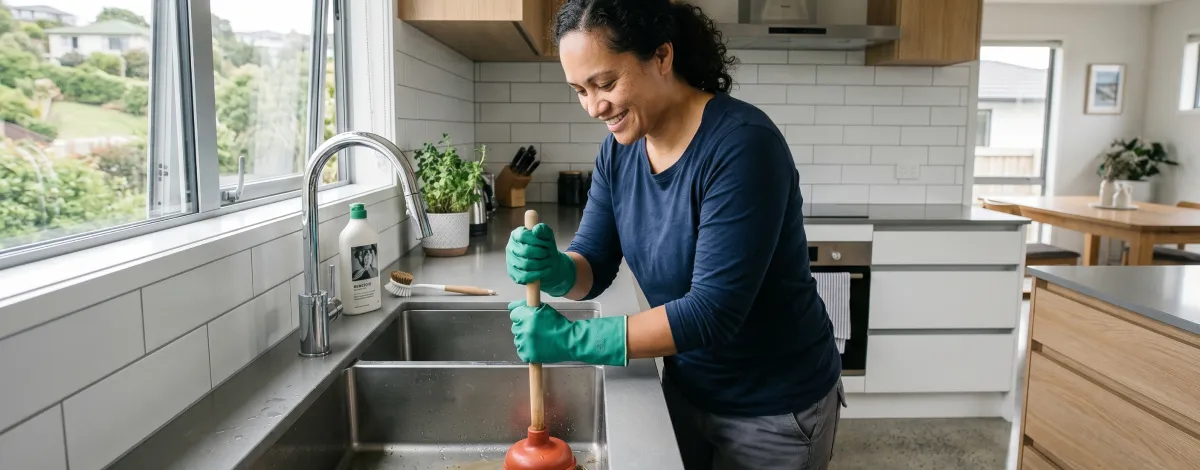
How to Unblock a Drain: Step-by-Step Guide
Most household drains clear in 10 to 20 minutes with hot tap water, a properly used plunger, and a wire hook. Remove visible debris first. Block the overflow hole. Plunge with a tight seal for 30 seconds in short, firm bursts. Flush with hot tap water. If the drain still backs up, or if more than one drain is slow at the same time, the blockage is deeper in the line and DIY won't fix it.
This guide covers the universal method for any household drain, the specific tricks that work for kitchen sinks, what to do without a plunger, how to handle an outside gully trap, and the honest signals that mean it's time to stop and call someone.
First, do this 30-second safety check
- Gloves on, window open. Drain water carries bacteria and gas.
- No caustic soda, no drain crystals, no bleach. They damage older pipes, harm seals, and create a chemical hazard for anyone who later opens the trap.
- If sewage is backing up into a shower, floor waste or gully, stop. That's a mainline issue, not a DIY job.
How to unblock a drain step-by-step
This is the universal method. It clears most household blockages in the first 1 to 2 metres of pipe.
Time: 10 to 30 minutes
Difficulty: Easy to moderate
Best for: A single slow or fully blocked fixture with no overflow elsewhere
Stop and call a drainlayer if: Water backs up in a second fixture, the gully trap outside overflows, you smell sewage, or nothing's shifted after two proper attempts
Tools and supplies
- Rubber gloves
- A cup plunger (for sinks and showers) or a flange plunger (for toilets)
- A bucket and an old towel
- A torch
- A straightened wire coat hanger with a small hook bent into one end
- An adjustable wrench (if you might need to remove the P-trap under the sink)
- Optional: a hand auger / drain snake. Bunnings or Mitre 10 carry them for around $30 to $60
What not to use
- Caustic soda or drain crystals (damage pipes, dangerous splashback)
- Boiling water in older PVC or clay drains (hot tap water is enough)
- A wire coat hanger jammed in hard (gentle hooking only)
- Repeated toilet flushing (the second flush is usually the flood)
- Pressure washers down a household drain (can crack pipes or blow seals)
Steps:
1. Clear what you can see first.
Lift the grate or pull the plug. Use the wire hook to pull out hair, food scraps, soap scum or anything obvious. Around 90% of shower blockages clear here.
2. Bail out standing water.
If the sink or basin is full, scoop water into a bucket until the plunger cup will be properly submerged. You also want any chemical-treated water out of the way.
3. Block the overflow hole.
Most sinks and basins have a small overflow opening at the back. Cover it with a wet cloth. Without this, your plunger can't build pressure and you're wasting effort.
4. Plunge properly.
Add enough water to cover the plunger cup. Press down firmly to form a seal, then pull up sharply. Repeat in short, firm bursts for 30 seconds. The pull is where the work happens, not the push. Most poorly-plunged drains fail because people only push.
5. Flush with hot tap water.
Run the hot tap for 60 seconds. If the water drains freely, you're done. If it's slow, do one more round of plunging.
6. Use the hook or hand auger.
Feed it slowly into the drain. Turn gently. When you feel resistance, hook the clog and pull back rather than forcing through. Twist as you withdraw.
7. Open the P-trap (kitchen and bathroom sinks only).
The U-shaped pipe under the sink is where about half of all kitchen-sink blockages actually sit. Place a bucket directly under the trap. Loosen the two slip nuts by hand or with an adjustable wrench. Slowly remove the trap and tip the contents into the bucket. Clean it out, check the inlet pipe with your torch, and reassemble. Run water and check for leaks at both joints.
8. If two full attempts haven't shifted it, stop.
Continuing risks pushing the blockage deeper, damaging older pipes, or stressing the trap seals. Move to the signs your blockage is bigger than DIY section.
Does baking soda and vinegar actually unblock a drain?
Short answer: sometimes for a slow drain, never for a real blockage.
The reaction creates carbon dioxide and a bit of fizzing. It can loosen light soap scum or freshen a smelly drain. It won't shift hardened grease, won't move a hair mat, and won't touch tree roots.
If you want to try it on a mild slow drain: half a cup baking soda, half a cup white vinegar, wait 10 minutes, flush with hot tap water. It won't damage anything but it usually won't fix anything either.
Drain-specific guides
Once you've tried the universal method, these go deeper into each fixture:
- How to unblock a sink — full P-trap walkthrough, hair clogs, grease build-up
- How to unblock a toilet — flange plunger technique, toilet auger, outside gully checks
- How to unblock a shower drain — hair removal, grate access, slow drains
Signs your blockage is bigger than a DIY fix
Stop plunging and pick up the phone if:
- More than one fixture is slow or backed up
- Water gurgles in another fixture when you use one (air being forced through a partial blockage)
- The gully trap overflows
- You smell sewage outside
- You've already tried twice with no movement
- The home is pre-1980s and the same drain keeps blocking
- Water is pooling above the drain run in the lawn or driveway
At this point continuing risks damaging the pipe or pushing the blockage deeper. You need a drain unblocker with a jetter and a camera.
